When Will He Sleep?
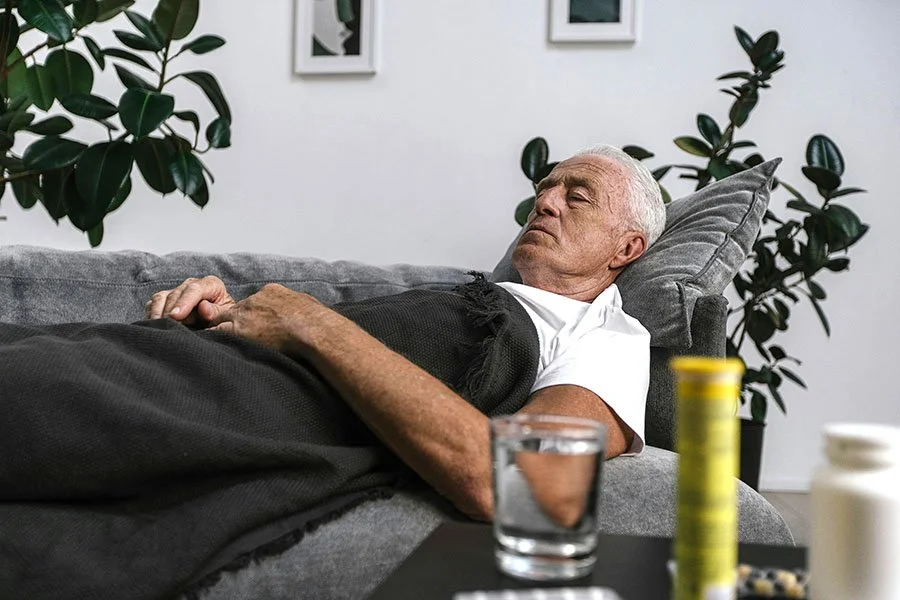
We all have a biological clock—but what happens when it simply stops keeping correct time? I found myself asking my dad’s physician exactly this, after watching an 85-year-old man stay awake for 30 hours straight, sleep for two, and then open his eyes again for another 30.
His doctor explained that in the latter stages of Alzheimer’s, the brain’s internal clock can simply stop functioning—that days and nights blur into one unbroken stretch of wakefulness. And so, they do. Thirty hours up, a couple of hours down, and again back at it. I’ve spent years as a caregiver, training myself to sleep lightly, one ear always open as I napped, but those weeks ground me down to something I didn’t recognize. Exhaustion isn’t quite the right word for it. Erosion, maybe.
Sleeplessness was only part of it. Dad had crossed into a restlessness beyond restiveness—hands rubbing together without pause, up from a chair and back down within the same minute, drifting toward the stove, the stairs, the door. I stopped being able to use the bathroom for any normal length of time. Those two or three minutes were too long to risk.
Even more perplexing was that the medications prescribed to help him sleep did nothing. There was no solution to this stage—only endurance, which I was running out of.
Dad’s doctor mentioned, almost in passing, that one of his late- stage patients had gone five full days without sleep. He also reminded me that everyone responds differently. I wrote that down and stared at it for a long time.
I hope this dilemma never finds your loved one. But if it does, you will find yourself reaching for every caregiving skill you have— keeping restless hands busy, keeping a restless mind occupied, redirecting again toward anything safe and absorbing. It becomes its own kind of endurance.
Draw on every resource available to you, including, if the time has come, Hospice. There is no caregiving award for outlasting this disease alone. A thirty-hour cycle that barely registers for your loved one will erode you completely. Ask for help before you have nothing left to give.
Make sure you use the hours of relief for solid sleep. You never know just how long the next ordeal could last.
– Gary Joseph LeBlanc, Director of Education - dementiaspotlightfoundation.org