After spending over a decade watching my father’s memories dissolve to Alzheimer’s, then eight more years as my mother’s mind clouded with vascular dementia, I’ve witnessed something remarkable: the power of a gentle animal companion. When Dad’s fingers found his Russian Blue’s fur, his breathing would slow. When Mom couldn’t recall my name but still reached for her Orange Tabby cat, her face would soften. These creatures offered what medicine couldn’t—comfort without expectations, love without the need for remembered histories.
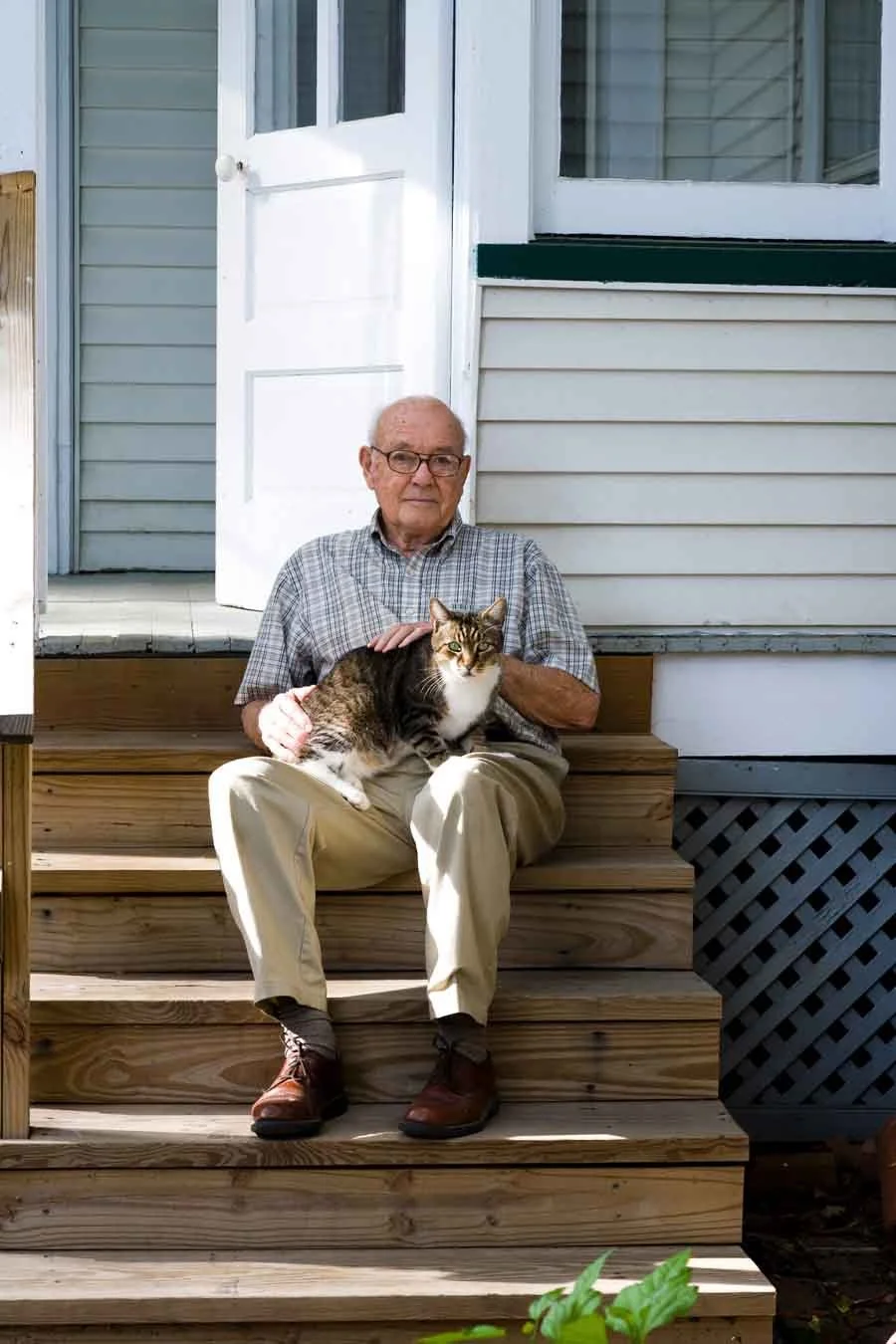
During my time as Dad’s caregiver, confusion would sometimes wash over him like an incoming tide. In those moments, I’d gently settle our cat onto his lap, saying offhandedly, “Look who needs some attention today.” The warm weight against his legs, the soft fur beneath his fingertips—these simple sensations became anchors. Within seconds of the first rumbling purr, I’d watch his furrowed brow smooth out, his restless hands grow steady, his breathing deepen into something resembling peace.
As dementia progresses, the world often shrinks to immediate needs and moments. Yet I’ve watched my father’s eyes brighten when it was “time to feed Kitty,” a task he could still claim as his own. Even on days when he couldn’t remember breakfast, he would ask about “the cat’s dinner,” this small responsibility becoming a thread connecting him to who he once was.
I’d often discover our kitchen floor transformed into a miniature dairy farm—five shallow bowls of milk arranged in a half-moon pattern, evidence of my father’s forgotten acts of caregiving. The cat, delighted with this abundance, would still be lapping contentedly when Dad would turn tome with earnest concern, asking for the third time that hour if Kitty had been fed. These circular conversations became our new normal, yet somehow, the presence of this purring creature smoothed our difficult days into something manageable.
Research suggests that stroking a cat’s fur or feeling a dog’s warm weight against your leg doesn’t just comfort the soul—it actually changes what happens in our blood vessels. The simple act of reaching down to scratch behind ears or fill a water bowl gets bodies moving when they might otherwise remain still. And in the quiet house where memories slip away like water through cupped hands, the soft padding of paws across hardwood floors becomes a gentle reminder: you are not alone here.
Animals possess a remarkable intuition for what dementia patients need in the moment. While we might grow frustrated hearing the same question for the fifth time in an hour, a cat simply curls closer, accepting each repetition as if it were the first. A golden retriever would rest his head onMom’s lap through her nonsensical monologues, his eyes never judging, only watching with patient devotion.
When Dad stroked our cat and his trembling hands steadied, that small creature accomplished what medications often couldn’t. Not every person connects with animals, of course—my uncle Robert would sooner befriend a cactus. But if your loved one once enjoyed animal companionship, consider arranging a visit with a neighbor’s gentle dog or a friend’s sociable cat. You might witness a moment of connection that transcends the fog of memory loss.
– Gary Joseph LeBlanc, Director of Education - dementiaspotlightfoundation.org