When your caregiving journey ends, the world outside your window continues its indifferent rhythm. Morning light still breaks through the curtains you forgot to close. Seasons change without permission. The calendar pages turn whether you're ready or not. Everything keeps moving, even when you feel frozen in place.
The absence persists like a phantom limb—there, yet not there. You build your days around this curious geography of loss, learning to navigate the contours of a space that exists only within you.
Caregiving wasn't something I chose—it was written into my birth certificate, an inheritance alongside my name. Before I had memories of my own, there was my oldest sister, her mind developing differently from others, her body occasionally seized by forces beyond her control. I learned to steady her before I learned to tie my shoes. My childhood promotion to be "watcher and protector" came without ceremony, a mantle I've worn every day since, its weight now as familiar as my own skin.
After decades of anticipating needs and managing crises, I believed myself immune to the aftermath. I was wrong. The void still came for me, patient as the tide, proving that even the most practiced caregiving hands can be left trembling when they have nothing left to hold.
You can explain caregiving for hours—the medications, the sacrifice, the vigilance—but words fall short. They always do. It's like describing the ocean to someone who's never felt saltwater rise around their ankles, never tasted that first unexpected salty wave. The world nods politely from a distance. "How difficult," they say, eyes already drifting elsewhere. They cannot see how you've learned to breathe underwater, how you've built your life around another's needs until the boundary between sacrifice and instinct blurs beyond recognition.
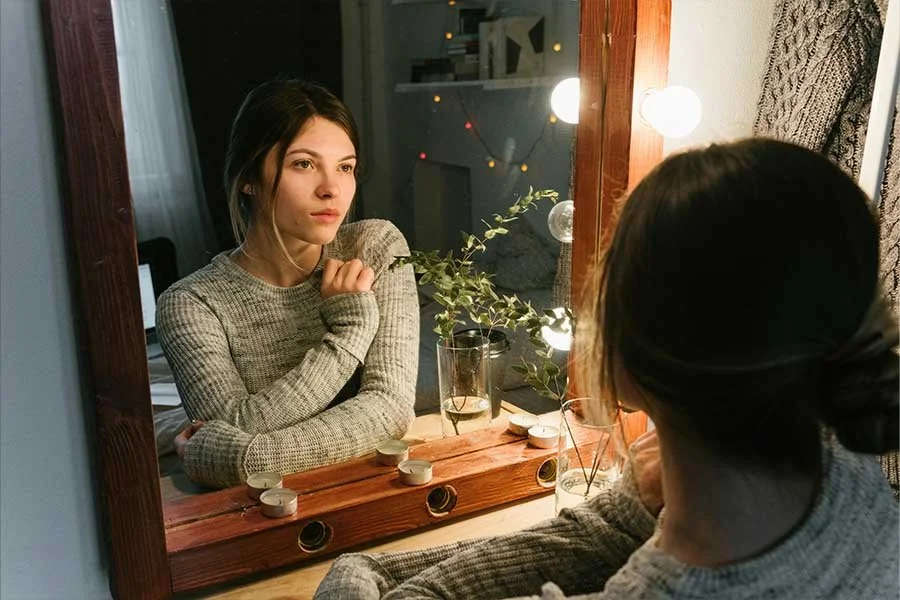
Standing before the bathroom mirror, your reflection seems like a stranger's. The person who knew exactly what to do at 3 AM, who could interpret needs from the slightest change in breathing—where have you gone? Your hands, now purposeless, trace the new hollows beneath your eyes. Behind the exhaustion, past the grief, something familiar flickers—the same quiet resolve that carried you through thousands of impossible days. It hasn't vanished. It's waiting, patient as you once were, for you to recognize it again.
Mistakes of a lifetime are, essentially, lessons. We stumble over the same stones, again and again, until our bodies finally remember the path. The wisdom we need most seems to arrive only after we've paid for it several times over.
Life has come full circle. Once again, I find myself beside my sister, tracking her medications, interpreting the subtle changes in her eyes as vascular dementia slowly reshapes her mind. Yet something has shifted in me. Where panic once lived, I find a strange calm. My hands remember what to do before my mind can worry about it—muscle memory built from the years spent guiding my father through the labyrinth of Alzheimer's, then my mother through her own cognitive twilight. Their lessons live in me now, a hard-won inheritance I never wanted but cannot deny that has prepared me for this moment.
This time, I recognize the warning signs. The journey ahead remains difficult, but grief's ambush will find me standing ready. I've mapped its tactics, studied its patterns. When the familiar hollowness returns—and it will—it will meet someone who can call it by name, who understands its language. The price of this wisdom was steep, but I've paid it in full.
Days pass where the only footprints in the yard are mine, where my voice grows rusty from disuse. But this isolation wears differently now—I've learned to stock provisions for the emotional winters, to recognize when the silence grows too loud. When I hear other caregivers speak of juggling two parents lost in the fog of dementia simultaneously, I touch the small mercy of my sequential losses like a talisman.
Whatever you do, my friends, never, ever lose your sense of humor. Find ways to laugh and laugh hard. It’s not only healthy, but it will help to hold back an ocean of tears.
Gary Joseph LeBlanc, Director of Education