A Different Approach to Parkinson’s Disease and Dementia
For many families, a diagnosis of Parkinson’s disease can feel overwhelming. Parkinson’s is a progressive brain disorder best known for causing tremors, stiffness, difficulty walking and problems with balance. As the disease progresses, some patients also develop dementia, which can affect memory, judgment, personality and the ability to live independently.
Dr. John Young of Young Foundational Health Center recently published a small case series exploring a different way of looking at Parkinson’s disease and Parkinson’s-related dementia.
Rather than focusing only on replacing dopamine or controlling symptoms, Dr. Young looked at several problems that may be occurring in the brain at the same time.
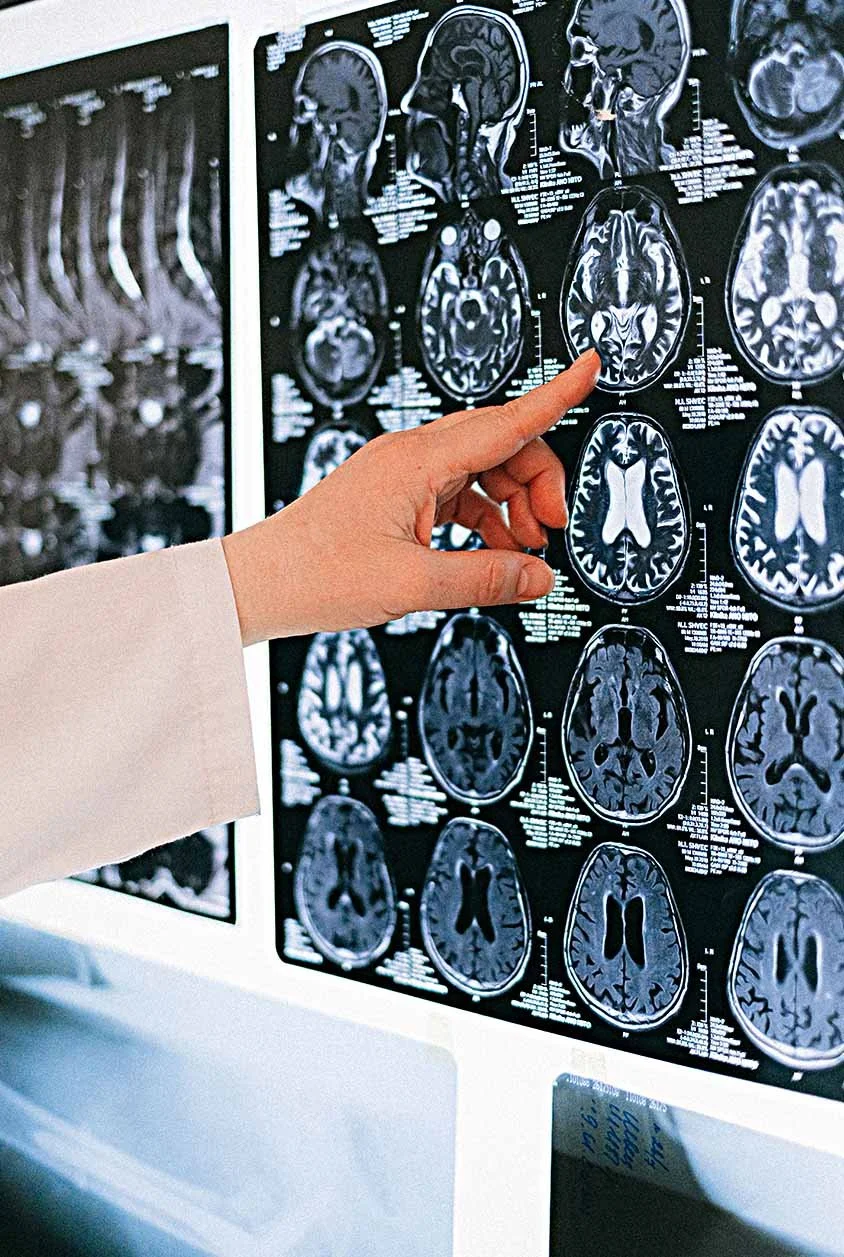
What May Be Going Wrong in the Parkinson’s Brain?
Think of the brain as an extremely complicated electrical system. Brain cells need energy, healthy electrical signals and the ability to communicate with one another.
In Parkinson’s disease, the nerve cells responsible for producing dopamine gradually become damaged. Dopamine is an important chemical that helps control movement, coordination and many other functions.
Dr. Young’s approach focused on several areas that may contribute to this damage:
Brain inflammation: Chronic inflammation may contribute to damage within the brain.
Poor electrical signaling: Brain cells communicate through tiny electrical signals. Parkinson’s disease may interfere with some of these signals.
BDNF: Brain-Derived Neurotrophic Factor, or BDNF, can be thought of as a type of “fertilizer” for the brain. It helps support the growth, survival and repair of nerve cells and plays an important role in the brain’s ability to adapt and form new connections.
Alpha-synuclein: This is a protein found naturally in the brain. In Parkinson’s disease, it can fold incorrectly and clump together, potentially damaging brain cells.
Instead of addressing just one of these problems, the treatment approach described in the paper attempted to address several of them.
What Did the Treatment Involve?
Patients in the case series received different combinations of umbilical cord-derived stem cells, exosomes and a medication called 4-aminopyridine. One patient also received Enbrel, an anti-inflammatory medication.
The stem cells were used in part because of their potential to produce BDNF. Exosomes were used for their potential anti-inflammatory effects, while 4-aminopyridine was used to help improve electrical signaling between nerve cells.
The stem cells and related treatments were delivered through the vertebral vascular system rather than surgically implanted directly into the brain.
What Happened to the Patients?
The case series included five patients with Parkinson’s disease, several of whom also had significant dementia.
The changes reported in some patients were substantial.
One 79-year-old man initially had severe confusion, tremors, difficulty speaking and a slow, shuffling walk. He needed a walker and had difficulty following commands. Sixteen weeks after treatment, he returned to the clinic walking independently without his walker. He was described as alert, energetic and socially interactive. His wife told the physician, “My husband is back.”
Another patient had become so confused that her husband was considering 24-hour nursing care. Her tremors were so severe that she struggled to feed herself or drink from a cup. Six months after treatment, her tremors were reported as minimal, she could eat and drink independently and had returned to her normal social activities.
Overall, all five patients showed some degree of improvement, and none showed deterioration during the observation period. Dementia-related symptoms were reported to have resolved in four of the five cases.
Promising — But Much More Research Is Needed
These results are encouraging, but they need to be viewed in the proper context.
This was a very small case series involving only five patients. It was not a large randomized, placebo-controlled clinical trial. Therefore, the results cannot yet prove that this treatment reverses Parkinson’s disease or that the same results would occur in other patients.
Larger, carefully controlled clinical studies are needed to determine how effective the approach may be, which parts of the treatment are responsible for the improvements, how long the benefits may last and which patients are most likely to respond.
Still, the findings raise an important question: Instead of treating Parkinson’s disease only as a dopamine problem, could addressing inflammation, nerve-cell health and electrical signaling together provide another avenue for research?
For patients and families facing Parkinson’s disease and dementia, that is a question worth continuing to investigate.
– John Young, MD - 727-545-4600, YoungFoundationalHealth.com